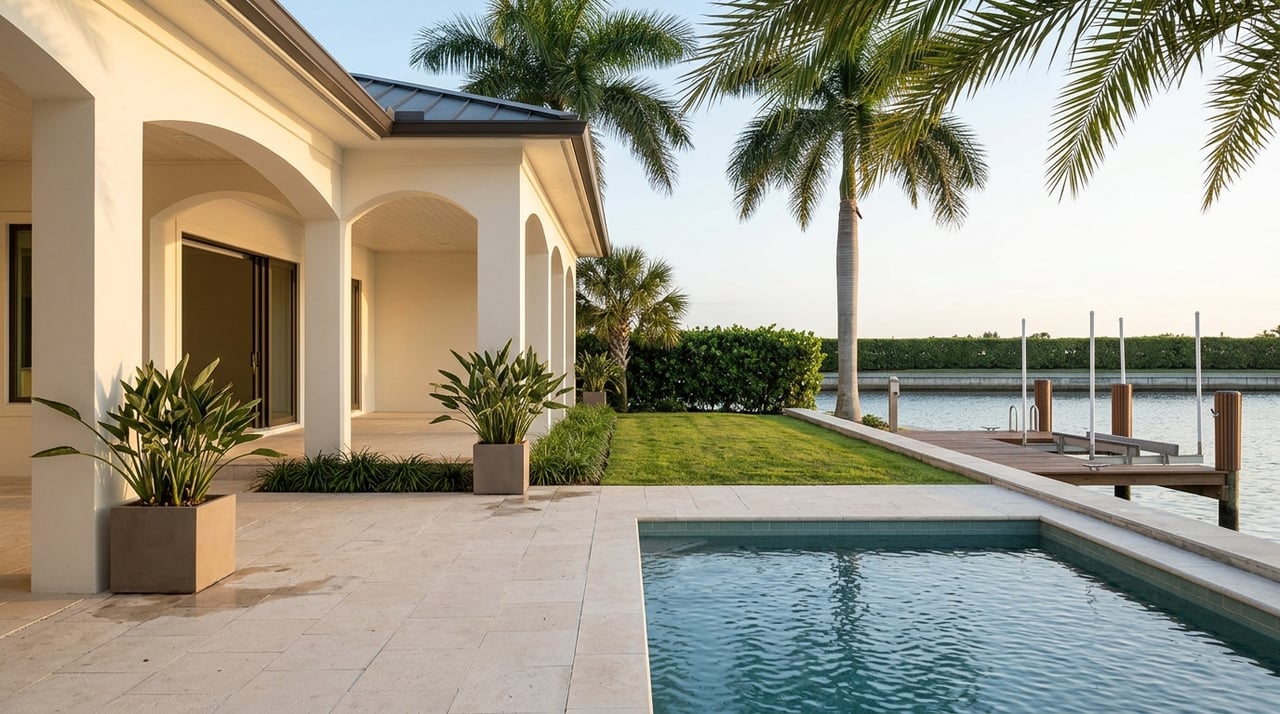
Port Royal Naples Waterfront Homes: Inside the Enclave
If you are exploring Naples waterfront real estate, Port Royal likely stands out right away. It is one of the city’s most recognized coastal enclaves, known for its water setting, estate-scale homes, and long-standing club culture. If you want a clearer picture of what makes it distinct, this guide will walk you through its setting, homes, lifestyle, and how it compares with nearby areas. Let’s dive in.
Port Royal sits at the southernmost tip of Naples, surrounded by water and closely tied to the Gulf-facing shoreline and Naples Bay. That setting shapes nearly every part of the neighborhood experience, from the street layout to boating access and the private-club lifestyle that many buyers associate with the area.
Its identity is also rooted in history. The Port Royal Club traces its beginnings to a 1959 vision for a residents’ gathering place, while city natural-resources materials note that Naples Bay and nearby waterfront land were historically mangrove wetlands later drained and channeled for development. Today, Port Royal is often understood through that mix of legacy, waterfront engineering, and long-established prestige.
Port Royal is not just a story of origin. It is also a story of rebuilding. Club materials note that the original clubhouse was lost to Hurricane Ian, and a June 2025 city filing states that the new beach club clubhouse was under construction with an estimated completion in summer 2026.
For buyers, that matters because the neighborhood is being viewed in a living moment of renewal. The club’s current presentation blends tradition with a forward-looking chapter, which adds another layer to Port Royal’s appeal for those who value both heritage and long-term vision.
One of the clearest things that sets Port Royal apart is its land-use pattern. The neighborhood is zoned R1-15A for single-family homes only, with no conditional uses. Minimum lot area is 15,000 square feet, and minimum lot width is 100 feet.
In practical terms, that zoning supports an estate-scale residential environment. You are not looking at a mixed-use district or a condo-focused pattern here. The city adopted the rezoning to keep future development compatible with the area’s existing massing and setback characteristics, which helps preserve a consistent residential feel.
The physical experience of Port Royal tends to feel quieter and more residential than more commercial or mixed-use parts of Naples. City neighborhood-priority materials highlight cul-de-sac improvements and traffic calming on Gordon Drive, reinforcing a low-speed street network.
That does not just shape traffic flow. It also supports the neighborhood’s private, tucked-away atmosphere. For many buyers, that sense of separation is part of what makes Port Royal so compelling.
Water is central to daily life in Port Royal. The neighborhood’s canal system is a defining feature, and the city established a special assessment district to remove sediment from the Port Royal and Champney Bay canals. That district originally included roughly 476 property owners.
Naples Bay connects to the Gulf through Gordon Pass, and the city describes the bay as a shallow estuary that has been heavily modified over time through dredging and canalization. For buyers who value a waterfront setting, this background helps explain why canal maintenance and water access are such important parts of the neighborhood conversation.
In Port Royal, canals are not just scenic. They are part of how the neighborhood functions. They shape lot orientation, views, boating potential, and the overall rhythm of the community.
That means a home search here often involves more than square footage or finishes. You may also be weighing canal frontage, bay proximity, route to the Gulf, and how the water component fits your lifestyle goals.
The Port Royal Club remains one of the neighborhood’s defining lifestyle anchors. It is a members-only beach club, and membership is tied to ownership of property in the Port Royal neighborhood.
According to current membership materials, eligible owners can access private beach, dining, spa, fitness, and tennis facilities. Club guest rules also point to a quiet, family-leaning environment, with children welcomed, pets restricted, and cell phones muted inside the clubhouse and on the pool and beach deck.
The club’s planning materials for the new clubhouse describe a member-guided vision centered on Gulf-view dining, covered outdoor dining, pool and beach-level gathering spaces, cabanas, and a sunset bar. The design is described as West Indies-inspired, but the bigger takeaway for most buyers is the lifestyle intention behind it.
This is not framed as a purely formal club experience. Instead, the emphasis is on beach time, dining, and informal social connection. If you are looking for a community with a strong private social layer, Port Royal offers a very specific version of that.
Port Royal is often compared with Aqualane Shores and Old Naples because all three are close to each other and highly sought after. But the day-to-day feel is different in each one.
Understanding those differences can help you narrow your search based on how you want to live, not just where you want to be on the map.
Aqualane Shores is Port Royal’s closest lifestyle neighbor in many ways. Its association describes it as a waterfront community between Port Royal and Old Naples, with deep-water channels and coves, Gulf access for many homeowners, and walkable proximity to Third Street, Fifth Avenue, and the beach.
Compared with Port Royal, Aqualane Shores tends to feel a bit more connected to downtown convenience. It is still strongly waterfront, but Port Royal reads as more isolated, more club-linked, and more estate-like in character.
Old Naples offers a different experience altogether. Naples Historical Society tours focus on the Naples Historic District, and the city’s connectivity study describes the Historic 3rd Street District as a center for shopping, restaurants, galleries, and beach access near Naples Pier.
That makes Old Naples more walkable and more retail and dining-centered than Port Royal. If Port Royal is about privacy, waterfront estate living, and club culture, Old Naples is more about direct access to the social and commercial core of the city.
Port Royal tends to appeal to buyers who want a highly residential waterfront setting with a strong sense of privacy. It can be especially compelling if you value large single-family homesites, canal or bay orientation, and a neighborhood identity shaped by ownership-linked club access.
It may also be a fit if you want a Naples address with a quieter street network and a lifestyle centered more on home, water, and private amenities than on walkable retail activity. In that sense, Port Royal offers a very distinct version of Naples living.
When you evaluate Port Royal, it helps to look at the neighborhood through a few practical lenses:
A thoughtful home search here usually comes down to fit. The right property is not only about architecture or address. It is also about how you want your Naples lifestyle to function day to day.
In a city known for coastal luxury, Port Royal still occupies a category of its own. Its combination of estate-scale zoning, water-defined layout, private-club culture, and limited residential pattern gives it a distinct identity that is hard to replicate elsewhere in Naples.
For some buyers, that exclusivity is the draw. For others, it is the feeling of calm, privacy, and continuity. Either way, Port Royal continues to stand apart as one of Naples’ signature waterfront enclaves.
If you are considering a move in Naples or want guidance on how Port Royal compares with other luxury waterfront neighborhoods, Michelle Trawick offers thoughtful, high-touch representation tailored to your goals.

Hidden Homebuying Expenses in Southwest Florida and Smart Ways to Plan Ahead.

Top Dining Destinations in Naples, Florida for Residents and Luxury Buyers.
Waterfront Homes for Sale in Marco Island, FL: A Luxury Buyer’s Guide to Life on the Water.

Whether you are buying, selling, or still considering your options, I’ll help you understand the choices, weigh the details, and plan your next move.